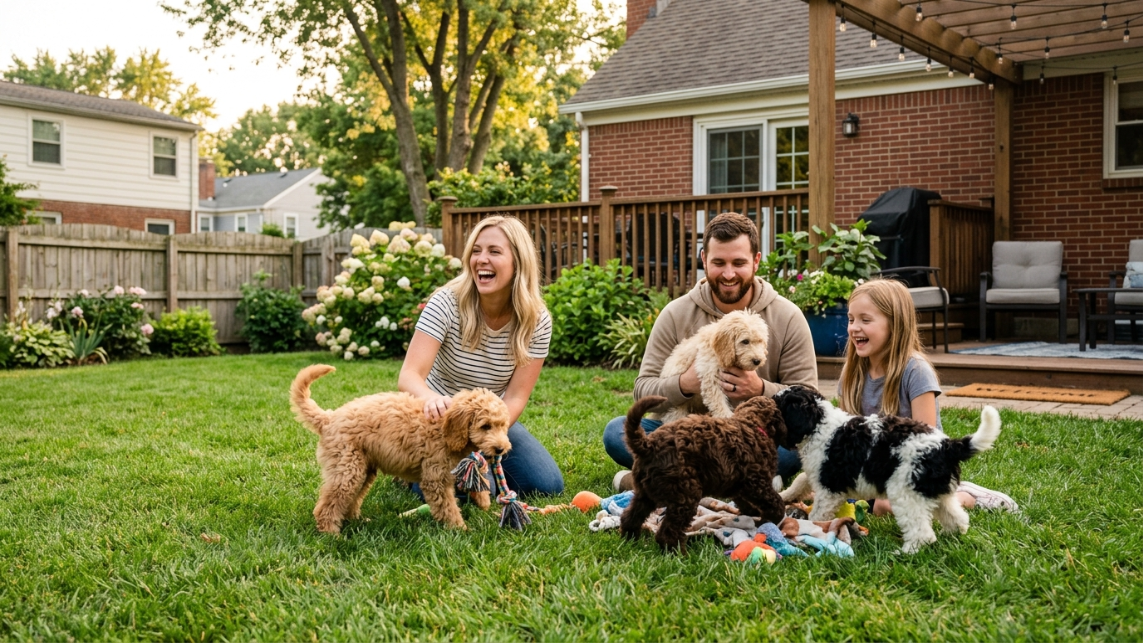

The car ride home feels like a dream. You have a tiny, warm, sleeping bundle in a crate next to you. Their little chest rises and falls. You have waited so long for this moment. But then you walk through your front door and reality hits. What do you do first? Where should the puppy sleep?
How do you make sure they feel safe? The excitement mixes with a sudden wave of oh my gosh, I have no idea what I am doing. Take a deep breath. Every new puppy parent feels this way. I have seen it hundreds of times over 7 years of raising puppies in my home.
The truth is, bringing a new puppy home in Ohio, families do it every single day, and they figure it out one hour at a time. This guide will walk you through the first few weeks, day by day, so you can focus on falling in love while I help you handle the rest.
Let me start with the night that scares newest parents the most. That first night with new puppy is emotional for both of you. Your puppy has just left the only home they have ever known, their mother, their littermates, and the familiar smells of our household. Now they are in a strange place with new sounds, new smells, and new people. Of course they are going to cry.
Here is what works. Set up a crate in your bedroom for the first few weeks. Your puppy needs to know they are not alone. Being able to see you, hear you breathe, and smell you nearby makes the world feel less scary. Put a soft blanket in the crate, one that smells like their littermates if the breeder sent one home with you. We always send a small blanket for exactly this reason.
Expect some crying. It breaks your heart, I know. But do not rush to pick them up every time they whimper. Instead, reach your fingers through the crate and let them sniff you. Speak softly. Tell them they are okay. Most puppies settle within 15 to 20 minutes if they feel your presence nearby.
Also plan for potty breaks. A puppy under 12 weeks old cannot hold their bladder through the night. Set an alarm for every 2 to 3 hours. Take them outside or to their potty pad, keep the interaction calm and boring, then right back into the crate. No playtime in the middle of the night.
The puppy first week home is a blur of potty breaks, chewed shoelaces, and moments of pure, overwhelming love. You will feel exhausted and elated in equal measure. That is normal.
Start with puppy proofing home before your puppy even arrives. Get down on your hands and knees and look at the world from their height. Electrical cords dangling behind the TV? Those look like tasty snakes. Houseplants on low tables? Those might be snacks. Shoes by the front door? Those are chew toys waiting to happen. Hide or block everything you do not want in your puppy’s mouth.
Create a designated puppy zone. This could be a playpen in your living room or a puppy proofed room like the kitchen. Put their crate, soft bedding, water bowl, and a few safe toys in this area. Your puppy should not have free run of the whole house for at least the first few months. Too many places to potty, too many things to destroy, too many ways to get overwhelmed.
The puppy first week home is also when you establish their puppy feeding schedule. Small breed puppies eat three to four small meals a day. Large breed puppies eat two to three meals. Ask your breeder what schedule they were on and stick to it for the first week. Sudden changes in food or feeding times can cause upset stomachs, and trust me, you do not want to add diarrhea to your list of first week challenges.
Before you bring that little fluffball home, you need supplies. A new puppy checklist in Ohio familes can follow will save you from midnight runs to the pet store.
Here is what you absolutely need. A crate that is just big enough for your puppy to stand up, turn around, and lie down. Too big and they will potty in one corner and sleep in the other. A playpen for safe confinement when you cannot watch them closely. Puppy pads if you live in an apartment or have a home without easy outdoor access.
High quality puppy food, the same brand the breeder was using. Stainless steel food and water bowls that are hard to tip over. A variety of chew toys, because puppies explore the world with their mouths. A soft collar or harness and a lightweight leash. Enzymatic cleaner specifically for pet messes, because regular cleaners do not remove the smell that tells your puppy this spot is a bathroom.
Also get grooming supplies. A soft brush, puppy shampoo, nail clippers, and ear cleaner. Getting your puppy used to grooming early makes professional visits so much easier. The puppy supplies checklist should also include a vet appointment. Call your vet before your puppy comes home and schedule their puppy vet first visit for within the first 48 hours. This is not optional.
A vet check confirms your puppy is healthy and starts their vaccination schedule. It also establishes you as a responsible pet parent in case you need to use the breeder’s puppy health guarantee later.
One more thing. A stuffed animal with a heartbeat simulator. This sounds silly, but I have seen it work miracles for anxious puppies. The heartbeat reminds them of snuggling with their littermates. You can find these online or at pet stores. Worth every penny for that first week.
The puppy adjustment period is real and it takes time. Most puppies need two to four weeks to truly settle into a new home. During this time, you might see behaviors that surprise you.
A confident puppy at the breeder’s home might suddenly seem shy or scared. That is normal. Everything is new. The sounds, the smells, the routines, even the way the light comes through your windows. Give them time to observe. Do not force them into overwhelming situations during the first week.
Some puppies regress in potty training during the puppy adjustment period. They had perfect aim at the breeder’s house and now they are having accidents every hour. This is not spite. This is stress and a new environment. Go back to basics. More frequent potty breaks. More praise when they go in the right spot. Less scolding when they make mistakes.
The puppy adjustment period is also when you might see changes in appetite. Some puppies eat less during the first few days. That is okay as long as they are drinking water and still showing interest in food. If they refuse to eat for more than 24 hours, call your vet.
I know some people feel guilty about crate training. They think it looks like a cage. Let me change your mind. Dogs are den animals. They naturally seek out small, enclosed, safe spaces to rest. A crate is not a punishment. It is your puppy’s bedroom.
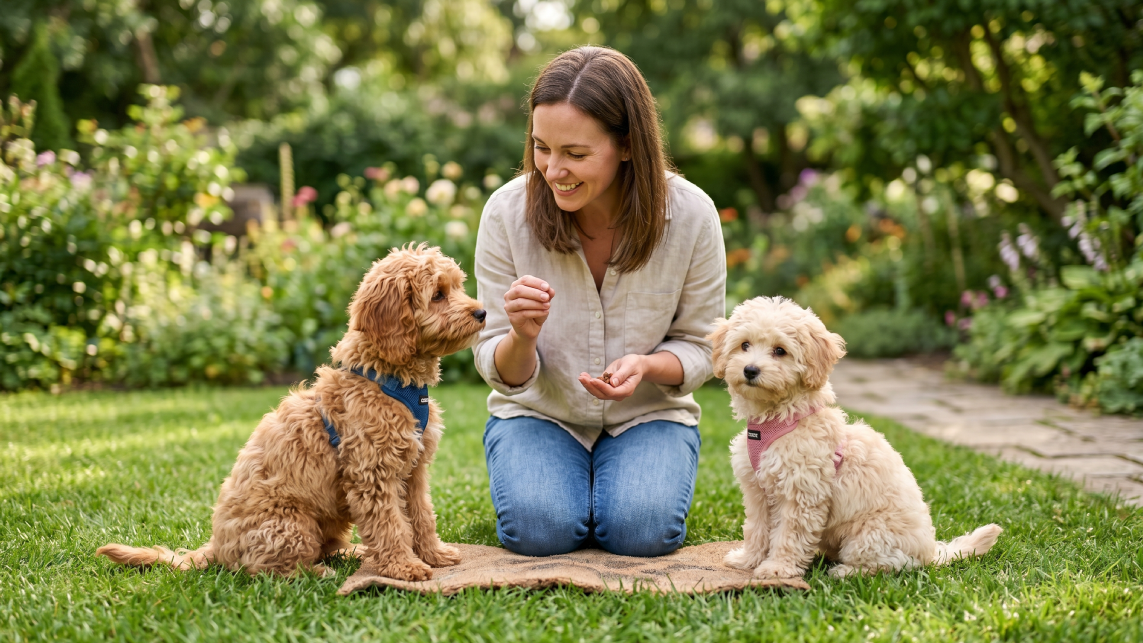
Crate training new puppy starts with making the crate amazing. Throw treats inside every time your puppy goes near it. Feed meals inside the crate with the door open. Put their favorite blanket and a special toy that only appears in the crate. You want your puppy to think of the crate as the best place in the house.
Never use the crate as punishment. If your puppy has an accident or chews your shoe, cleaning it up and then shoving them in the crate teaches them that the crate is jail. That is the opposite of what you want.
Start with short sessions. Put your puppy in the crate with a stuffed Kong or chew toy, close the door for just 30 seconds, then open it and act like nothing special happened. Gradually increase the time. A few minutes. Then ten minutes. Then thirty. Then an hour.
The puppy sleep schedule should include crate naps throughout the day. Puppies need 18 to 20 hours of sleep per day. Yes, that much. A tired puppy is not a well behaved puppy. Overtired puppies get cranky, bitey, and hyperactive. Enforced naps in the crate save your sanity and teach your puppy to settle themselves.
At night, keep the crate in your bedroom as I mentioned earlier. After a few weeks, if your puppy is sleeping through the night without accidents, you can slowly move the crate to its permanent location. But that first week? Keep them close.
Let us talk about potty training first week because this is where most new parents feel like failures. You are not a failure. Puppy bladders are tiny. Their control is almost nonexistent. Accidents are not bad behavior. They are biology.
Take your puppy outside or to their potty pad. After every nap. After every meal. After every play session. First thing in the morning. Last thing at night. And in between, whenever they start sniffing the ground in circles. That sniffing circle is the warning sign. If you see it, grab them immediately and get them to the potty spot.
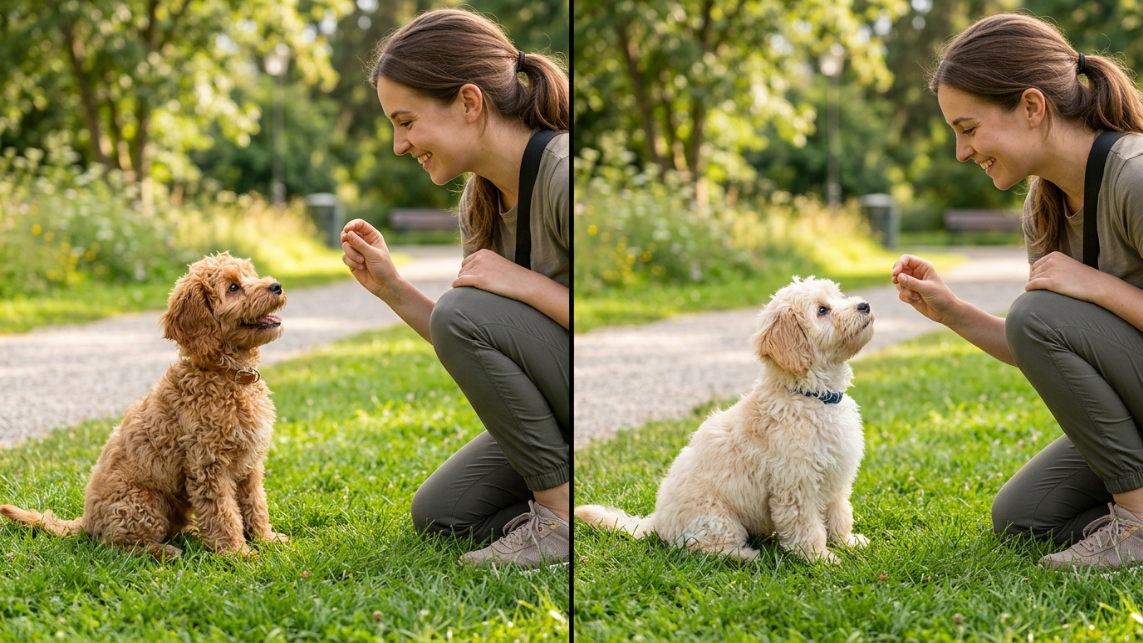
When they go in the right place, celebrate like they just won an Olympic gold medal. High pitched voice. Treats. Belly rubs. Dance around. You want them to think pottying outside is the greatest thing that has ever happened to anyone ever.
When they have an accident inside, and they will, clean it up with enzymatic cleaner. Do not rub their nose in it. Do not yell. Do not hit. All of those methods are cruel and ineffective. They just teach your puppy to be afraid of you. Instead, silently clean up and remind yourself to watch more carefully next time.
The puppy socialization first weeks are critical. The prime socialization window closes around 16 weeks of age. Everything your puppy experiences before that shapes their adult personality.
But socialization does not mean meeting every dog and every person in the neighborhood. It means positive, controlled exposure to the world. A bad experience during this window can create lifelong fears.
Start small. Carry your puppy around your yard. Let them watch cars drive by from a safe distance. Invite calm, vaccinated friends over to meet them. Play recordings of thunderstorms, fireworks, and traffic at very low volumes while giving treats.
The puppy socialization first weeks should also include handling. Touch your puppy’s paws, ears, mouth, and tail every single day. Gently. With treats. This prepares them for vet exams and grooming. A dog who hates having their paws touched will make nail trims a nightmare forever.
If you are looking for Frenchie first week home tips, the same principles apply. French Bulldogs are sensitive to heat and breathing issues, so keep socialization sessions short and cool. But the core idea is the same. Positive exposure early creates confident dogs later.
Avoid dog parks, pet stores, and other high traffic dog areas until your puppy is fully vaccinated, usually around 16 weeks. Parvo is real and it is deadly. Socialization does not require risk. Carry your puppy in your arms or use a stroller to show them the world safely.
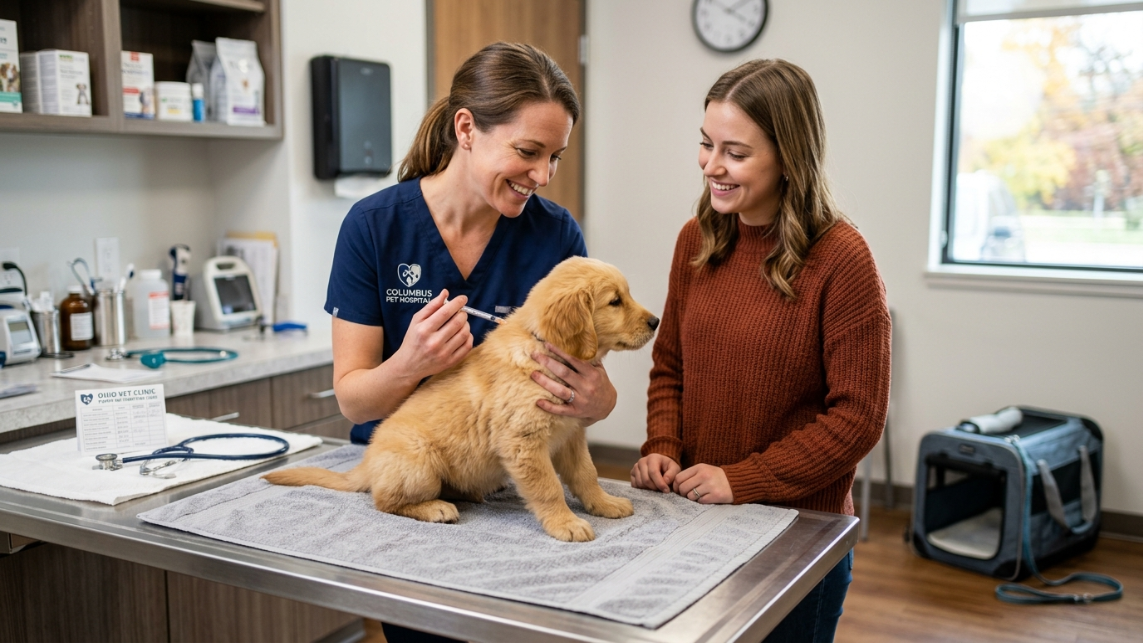
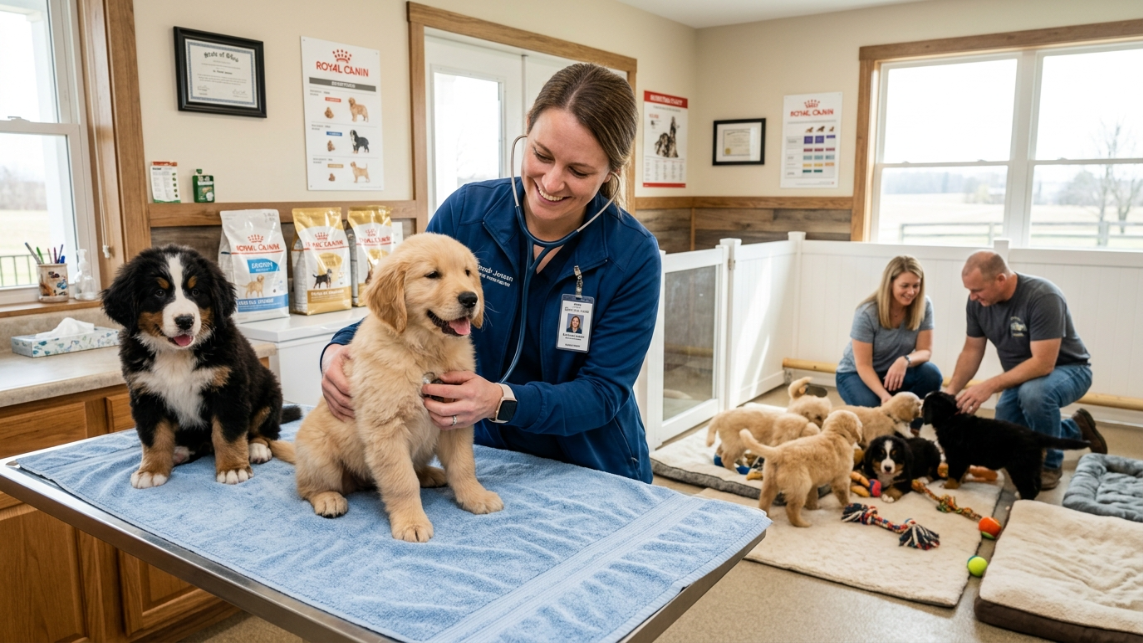
Schedule that puppy vet first visit within 48 hours of bringing your puppy home. This visit accomplishes several important things. The vet will do a thorough physical exam. They will check your puppy’s eyes, ears, heart, lungs, and body condition. They will look for any obvious health issues like hernias, heart murmurs, or cleft palates.
They will administer the first round of vaccines if your breeder has not already done so. They will discuss a deworming schedule. Most puppies have intestinal parasites, even from clean environments. Deworming is routine and important.
Bring everything from your breeder. The puppy health guarantee, vaccine records, deworming records, and any health testing results on the parents. Your vet will want to see all of this. Also bring a stool sample. Collect it the morning of the appointment. This allows the vet to check for parasites.
Ask questions during this visit. How often should I feed my puppy? When should I spay or neuter? What signs of illness should I watch for? A good vet loves educated pet parents. The puppy vet first visit is also your chance to build a relationship with your vet. You will see them many times over the next year. Find someone you trust and feel comfortable with.
Consistency is kindness during those first weeks. A puppy feeding schedule and puppy sleep schedule reduce anxiety and prevent accidents. Feed three meals a day for small breeds, two to three meals for large breeds. Same time each day. Same location. Leave the food down for 15 minutes, then pick it up. This teaches your puppy that mealtime is mealtime, not an all-day buffet.
After each meal, take your puppy to their potty spot. Most puppies need to eliminate within 15 to 30 minutes after eating. For sleep, puppies need about 18 to 20 hours of rest per day. A typical schedule looks like this. Wake up, potty, breakfast, play, potty, nap in crate for two hours.
Wake up, potty, play, training, potty, nap. Repeat throughout the day. Evening has longer awake periods. Bedtime around 10 PM with potty breaks every few hours. The puppy sleep schedule protects your puppy from becoming overtired and cranky. It also gives you breaks. Use those breaks to shower, eat a hot meal, or just stare at the wall in peace. You deserve it.
Let me help you with puppy home preparation room by room so nothing gets missed. Living room. Remove or hide electrical cords. Put away remote controls, video game controllers, and anything small enough to swallow. Block access to the back of electronics where warm spaces invite chewing. Move houseplants up high. Secure books on lower shelves.
Put cleaning supplies behind childproof latches. Move trash can inside a cabinet or buy a step can with a locking lid. Keep food off counter edges. Puppies can and will pull down a whole rotisserie chicken.
Close closet doors. Shoes belong inside closets, not on floors. Keep laundry off the floor. Socks are a common intestinal blockage hazard. Make sure jewelry and small items are out of reach.
Close toilet lids. Puppies can fall in. Keep medications, toothpaste, and cleaning products in high cabinets. Remove trash cans or put them behind closed doors.
Antifreeze is sweet tasting and deadly. Store it high up or not at all. Keep sharp tools, paint, and chemicals locked away. Check for small spaces where a puppy could get trapped.
Check fences for gaps. Remove toxic plants like lilies, azaleas, and sago palms. Fill in holes where puppies could escape. Remove mushroom patches, which can be poisonous.
The sleepless nights will end. The potty accidents will become rare. The chewed furniture will eventually be forgotten. But this time, these first few weeks when your puppy is tiny and curious and learning to trust you, this time flies by faster than you can imagine.
One day you will look at your grown dog and barely remember the puppy who fit in one hand. You will miss the soft puppy fur. You will miss the way they fell asleep mid play session. You will miss the tentative first tail wags.
So yes, be prepared. Follow the puppy first week home guidelines. Stick to your puppy feeding schedule and puppy sleep schedule. Do all the puppy home preparation room by room checklist. But also stop sometimes. Just hold your puppy. Breathe in that new puppy smell. Let them fall asleep on your chest. Those moments are the real reason you did all of this.
We have raised puppies in our home for 7 years, and I still cry a little every time one leaves for their new family. But I also smile knowing they are going to homes just like yours. Homes filled with love, patience, and the willingness to learn.
You have got this. And we are here for you every step of the way.
See available puppies now and take the first step toward the best adventure of your life. Your puppy is waiting to come home. Let us help you find each other.