
Bringing a new puppy home is like welcoming a tiny tornado of love, teeth, and pure joy. Your heart is full, but your home might not be ready. I have been right where you are, walking through each room with wide eyes thinking, “What did I forget?”
After seven years of raising puppies in our own home surrounded by children and daily chaos, I have learned exactly what works and what does not. You cannot just buy a bed and call it done. You need a real plan. Whether you live in a cozy apartment or a sprawling house in Ohio, learning the art of puppy proofing home Ohio style will save you from chewed shoes, midnight accidents, and unnecessary stress.
Today, we are walking through every single room together. Grab a notebook, take a deep breath, and let me help you create a safe home for new puppy before those little paws even touch your floor.
You might be tempted to wait until the night before you bring your baby home. Please do not do that. The best puppy home preparation checklist starts at least two weeks early.
Why?
Because you will think of things you never considered, like the gap under your refrigerator or that loose cabinet handle your toddler has ignored for months. A puppy will find everything you missed. When we talk about puppy proofing home in Ohio, residents understand that weather plays a role too.
Cold drafts during winter and hot summer days’ affect where you place your puppy’s crate and play zones. Preparing early gives you time to order puppy gates and barriers that actually fit your doorways. It also allows you to slowly introduce changes to your family members so everyone feels excited instead of overwhelmed.
Trust me, a calm home on day one sets the tone for the next twelve to fifteen years. Your puppy arrives nervous, leaving their mother and littermates. Your job is to make your house smell like safety. That takes preparation, not panic. So let us walk through each room together like two friends getting ready for a baby shower, except this baby has four paws and a serious chewing habit.
The living room is where your family gathers, which means it will also be your puppy’s favorite hangout spot. Start by getting on your hands and knees. Yes, really. Crawl around like a puppy and see the world from their height. You will immediately notice every single dangling cord, forgotten coin, and sharp table leg.
Electrical cord safety dogs are non-negotiable. Puppies love to chew on phone chargers, lamp cords, and television cables because they look like snakes or toys. Use cord concealers or run wires through PVC pipes. Alternatively, unplug everything your puppy can reach until they learn what is off limits. I cannot tell you how many times a chewed laptop charger has ruined a family’s evening.
Next, think about puppy gates and barriers. You do not want your new baby running upstairs unsupervised or sneaking into rooms with toxic plants dogs should never eat. Popular houseplants like lilies, pothos, and snake plants are dangerous. Either move them to a high shelf or give them away to a friend without pets.
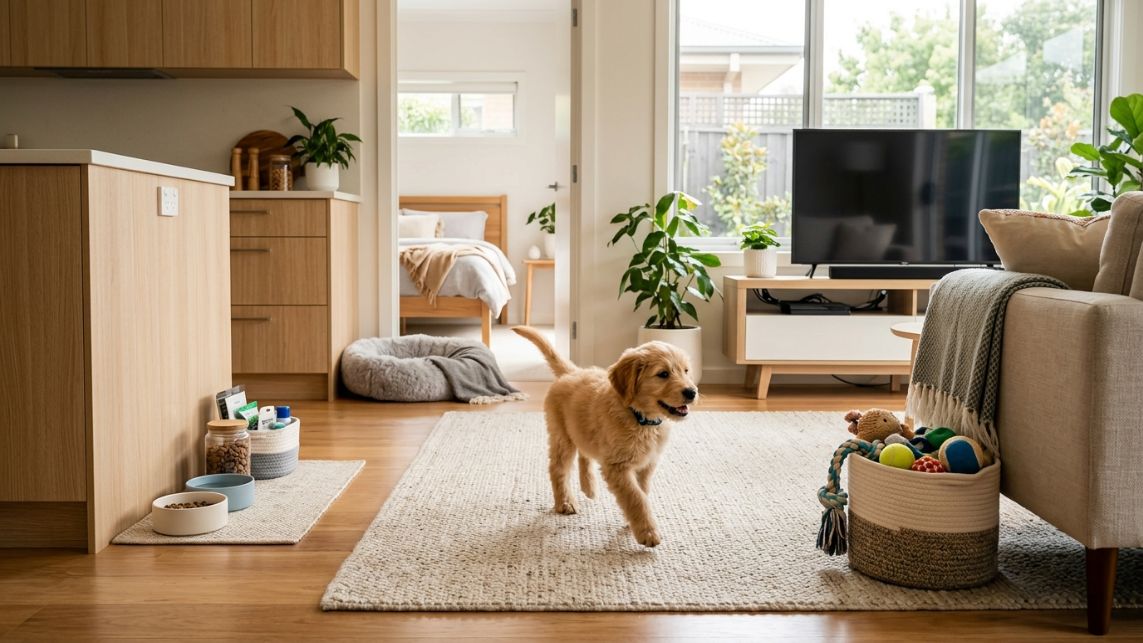
Create a puppy play zone in a corner of your living room with a washable mat, a few safe toys, and a soft bed. This becomes their spot. When you are cooking or busy, this zone keeps them contained without feeling trapped. A safe puppy area setup gives you peace of mind and gives your puppy a predictable space to relax.
The kitchen is a land of smells and temptation. It is also full of hazards. When you are puppy proofing home in Ohio, families often forget how low kitchen cabinets sit. A curious puppy can open lower cabinets with one gentle nose push. Install baby proof locks on any cabinet that holds cleaning supplies, trash bags, or human food.
Puppy proof kitchen requires you to rethink your trash can situation. Buy a can with a locking lid or store it inside a pantry. A puppy who tips over the trash will eat chicken bones, onion scraps, or chocolate wrappers, all of which are toxic. Also, never leave food on counter edges.
A jumping puppy can pull down a hot pan or a bowl of grapes, and grapes are extremely dangerous for dogs. Keep your dishwasher closed at all times. Open dishwashers have sharp utensils and standing water that puppies love to lap up. The rinse aid residue can upset their stomach.
Similarly, watch out for low hanging oven mitts or dish towels. A puppy who pulls one down will shred it and possibly swallow fabric. Your safe home for new puppy checklist must include moving all spices, especially xylitol containing sweeteners, to upper cabinets.
Xylitol is deadly to dogs even in small amounts. I know this sounds overwhelming, but take it one drawer at a time. You have two weeks. You can do this.
Bedrooms seem harmless, but they hide tiny dangers. Socks, hair ties, earrings, and loose change all look like toys to a puppy. A swallowed sock can cause a life threatening intestinal blockage. Make it a family rule to keep bedroom floors completely clear. Use lidded laundry baskets and shut closet doors at all times.
Puppy crate placement is often decided in the bedroom. Many families choose to keep the crate on a nightstand or beside the bed for the first few weeks. This helps your puppy feel less alone during the night. Make sure the crate is not near dangling blind cords or electrical outlets.
Cover the crate partially with a blanket to create a cozy den feeling. Now for the bathroom. Toilet lids must stay down. Puppies are curious about water and can fall in or drink harmful cleaning residue from toilet bowls. Keep all medications, razors, and toothpaste in a medicine cabinet with a childproof latch.
Never leave a wet bath mat on the floor. Puppies love to chew rubber backed mats, and those pieces can choke them. How to puppy proof a bathroom also includes removing small trash bins. Buy a step can with a lid or simply keep the bin under the sink behind a locked door. Bathrooms seem small, but they are accident waiting rooms for an unsupervised pup.
You cannot watch your puppy every single second. That is not realistic, and it is not healthy for either of you. A safe puppy area setup gives you freedom and gives your puppy structure. Choose a corner of your living room or a spare bedroom that is completely empty except for puppy safe items.
Use puppy gates and barriers to block off this area from the rest of the house. Inside the zone, place a crate, a puppy play zone with soft mats, water bowl, and a few rotating toys. Do not put puppy pads near the bed because puppies naturally avoid soiling where they sleep. Keep pads on the opposite side of the zone.
Puppy crate placement inside this zone matters. Position the crate so your puppy can see the main activity area of your home. Feeling isolated creates anxiety and barking. Also, make sure the crate is not in direct sunlight or directly under an air conditioning vent. Puppies cannot regulate their body temperature well during the first few months.
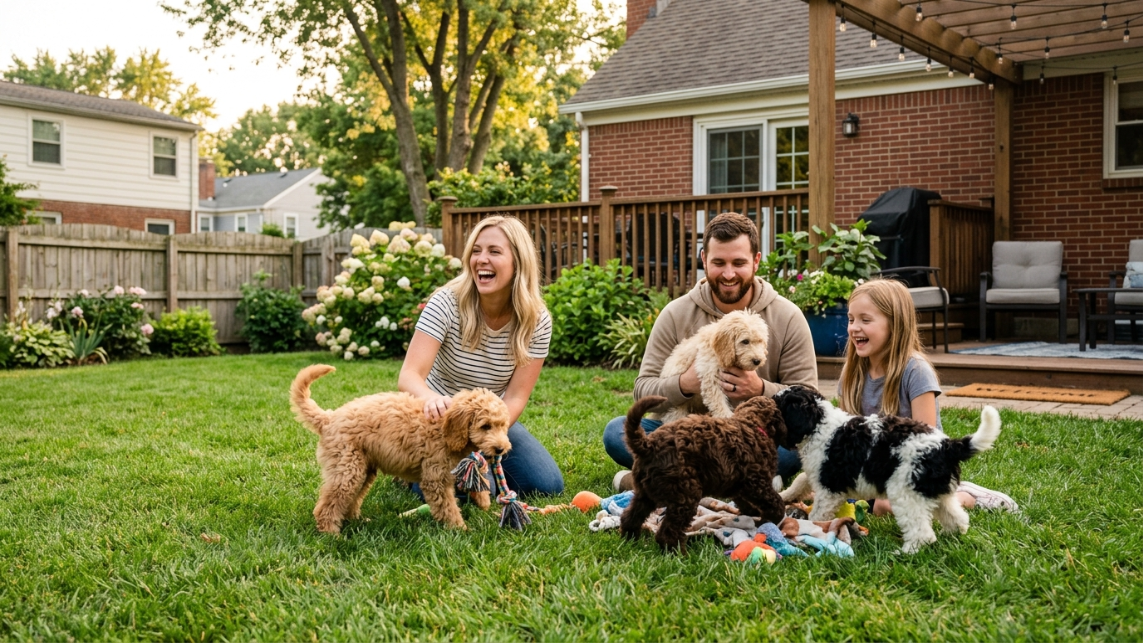
If you have a yard, you need to think about outdoor puppy safety Ohio style. Ohio weather gives us frozen ground in winter and hot humidity in summer. Never leave a young puppy outside alone. They overheat quickly and can also be picked up by birds of prey in rural areas.
Check your fence for gaps or loose boards. Puppies are escape artists. A hole the size of a soda can is enough for a small breed to squeeze through. Also, look at your plants from a puppy perspective. Are there toxic plants dogs should avoid like azaleas, tulip bulbs, or daffodils? Dig them up or fence them off.
Remove any standing water. Puddles, old buckets, or kiddie pools left out can grow bacteria or contain mosquito larvae. Your puppy will try to drink anything. Provide fresh clean water in a tip proof bowl instead.
Setting up puppy space Ohio outdoors also means creating a shaded rest area. Even on mild days, small brachycephalic breeds like French Bulldogs or Boston Terriers struggle in heat. If you are welcoming a flat faced baby, outdoor time should be limited to ten minutes at a time until they are older. Always supervise. Always.
You have puppy proofed every room. Your heart is racing. Now the baby arrives. Following a new puppy first week guide will calm your nerves and help your puppy settle faster. Day one is about low stimulation. No guests. No loud music. Just you, your immediate family, and the puppy learning to trust you.
Keep your puppy on a leash even inside the house for the first few days. This is called umbilical cord training. It prevents them from sneaking off to have an accident in a corner you missed. It also builds bonding because they learn to look to you for direction.
Stick to a routine immediately. Wake up, potty break, eat, play, nap. Repeat. Puppies thrive on predictability. Their little brains are overwhelmed with new sights and sounds. A schedule feels like a safety net.
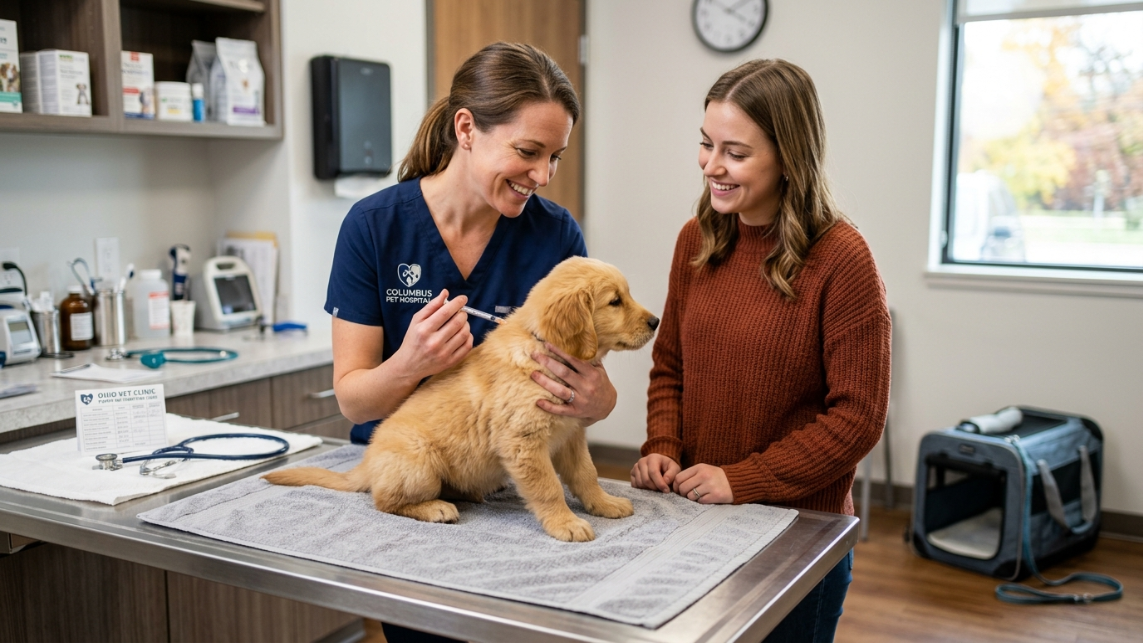
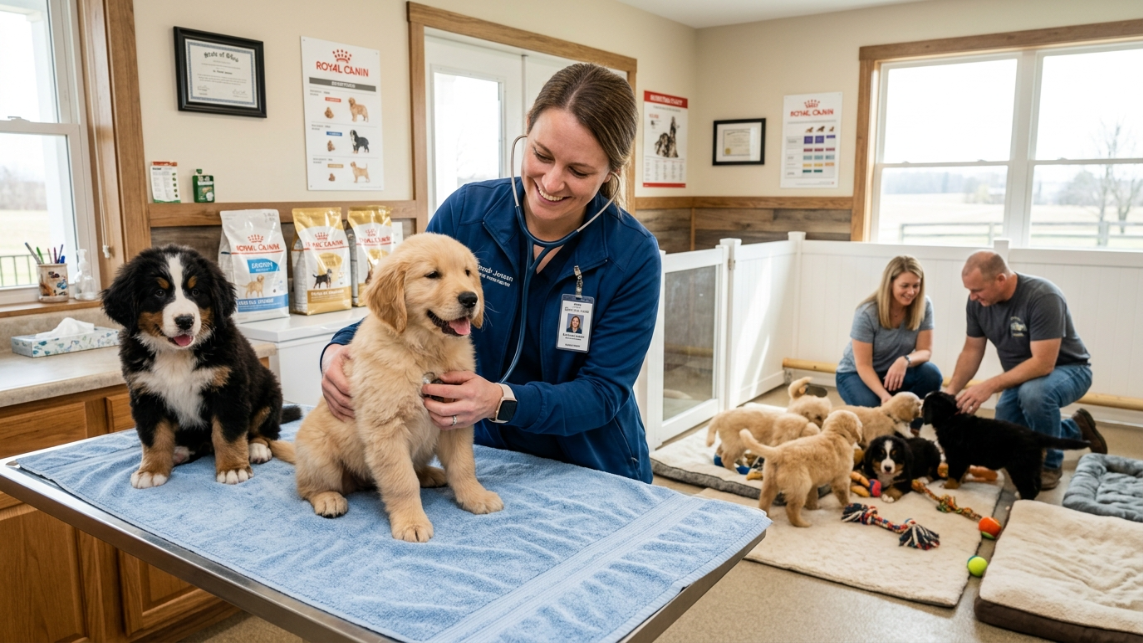
Also, begin practicing short alone time right away. Put your puppy in their safe puppy area setup for five minutes while you go to another room. This prevents separation anxiety later. Do not forget about veterinary care. The puppy vaccination schedule in Ohio, veterinarians recommend starts around six to eight weeks old.
Your breeder should provide the first round. You will need to schedule boosters every three to four weeks until sixteen weeks. Call your vet before your puppy arrives so you are not scrambling last minute.
If you are bringing home a flat faced breed, listen closely. Frenchie home preparation tips are slightly different than other puppies. Small brachycephalic breeds need harnesses, not collars, from day one. A collar can collapse their delicate trachea. Buy a step in harness that does not go over their head.
These babies also overheat easily. Your puppy crate placement should never be near a sunny window or a heat vent. Keep your home between 68 and 72 degrees. Buy a cooling mat for their puppy play zone. During summer, outdoor time is limited to five to ten minutes.
Feeding is different too. Flat faced puppies gulp air while eating, which causes bloating and gas. Use a slow feeder bowl or a raised dish. Also, keep fresh water available at all times but monitor them closely. Some flat faced breeds can accidentally inhale water while drinking enthusiastically.
Grooming supplies must include wrinkle wipes. Those adorable face folds’ trap moisture and food, leading to infections. Wipe their face after every meal. This becomes a lovely bonding ritual if you stay gentle and use a soft cloth. Your Frenchie home preparation tips list is short but vital. Follow it and your flat faced baby will thrive.
The night before bringing home a new puppy is always filled with equal parts excitement and nervous energy. Walking through each room, checking every corner, there is always that tiny voice wondering if something important was missed. Here is the honest truth.
No one is ever 100 percent ready, and that is perfectly okay. But if this puppy home preparation checklist has been followed step by step, then a new puppy parent is closer than most to being fully prepared. The cords are hidden, the cabinets are locked, a safe puppy area setup is ready, and outdoor puppy safety Ohio families need has been carefully addressed.
If a flat faced breed is coming home, those Frenchie home preparation tips have been put into action too. Now comes the beautiful, messy, heart expanding part. Actually living with the new family member. The first week will feel like a blur of potty breaks, sleepy snuggles, and a few inevitable accidents.
Find your new puppy today and trust that a prepared home is already full of love, waiting patiently for those tiny paws to arrive.